
In a controversial move, law enforcement officials have removed a decades-old peace vigil outside the White House. Directed by President Donald Trump, this decision is part of broader efforts to address homelessness in Washington, DC, and improve public safety in the nation’s capital.
“Phantom Ferrari Driver” Apprehended After Years of High-Speed Escapades on Czech Motorways
What Happened: The White House Peace Vigil Removed
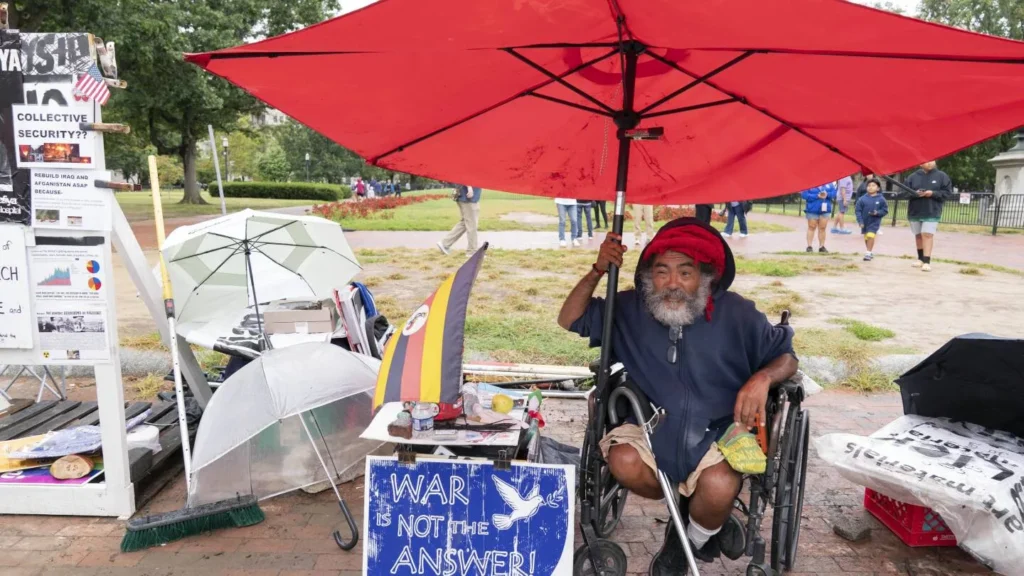
The White House confirmed that the peace vigil, which had stood since 1981, was dismantled early Sunday morning by the Park Police. Volunteer Philipos Melaku-Ballo, a long-time supporter of the vigil, criticized the removal, stating that the vigil was wrongly labeled as a homeless encampment rather than a protected free speech demonstration.
“The difference between an encroachment and a vigil is that there is an encroachment where homeless people live. I do not have a bed here; I have signs, and it is protected under the First Amendment,” said Melaku-Ballo.
Who is Philipos Melaku-Ballo?
Philipos Melaku-Ballo has been a volunteer at the vigil for many years, advocating for nuclear disarmament and anti-war efforts. He is one of the most vocal defenders of the vigil, which was originally established by activist William Thomas. Melaku-Ballo insists the vigil was a symbol of peace and political expression, not a residence for the homeless.
Historical Background of the Peace Vigil
The vigil began in 1981 when activist William Thomas established it as a protest against nuclear weapons and war. Over the decades, it became one of the longest-running peace demonstrations in U.S. history. While the messages have evolved, the vigil has consistently served as a symbol of anti-war activism and political opposition.
Trump Administration’s Perspective
The Trump administration has intensified efforts to remove visible homelessness from public spaces, citing public safety and the need to maintain a welcoming environment around the White House. Officials stated that the vigil was removed to ensure the safety and comfort of visitors to Washington, DC.
Controversy and Civil Rights Concerns
Critics argue that the removal of the vigil infringes on civil rights. Melaku-Ballo and other advocates claim the vigil was incorrectly classified as a homeless encampment to suppress political expression. Reports suggesting security risks, such as rat infestations or weapon storage, were disputed, with no official evidence presented during the removal process.
Public and Social Media Reactions
The dismantling of the vigil sparked strong reactions across social media and advocacy groups. Supporters of the vigil see it as a violation of free speech and an attempt to erase visible reminders of political dissent. Conservative voices, including commentator Brian Glenn, argue that the vigil’s message had shifted over time, labeling it as anti-American and visually disruptive for visitors to the White House. This debate reflects a larger national conversation about balancing public safety, civil rights, and political expression.
Official Statement and Next Steps
The White House defended its actions, emphasizing city beautification and public safety initiatives. Melaku-Ballo has vowed to continue defending the legacy of the vigil, promising to fight for free speech and peaceful activism in Washington, DC. As the story unfolds, it highlights the complex intersection of homelessness, political protest, and public policy in the nation’s capital.
Conclusion
The removal of the 40-year-old White House peace vigil under the Trump administration has sparked controversy, dividing opinions between civil rights advocates and public safety proponents. While the government cites safety and urban beautification, supporters of the vigil argue that free speech and political expression are being compromised. This event underscores ongoing debates about the balance between civic order and the protection of fundamental rights in the United States.